
Resources
Proudct Information
Catalogs

Technical Data Sheets
Access detailed technical data sheets for each product, providing essential specifications and performance details to ensure the right fit for your project.

Certificates

Company Profile
Download the official Najjar Wood Industries company profile, presenting an overview of our history, manufacturing capabilities, product divisions, quality standards, and export markets.
Expert Guidance

Procurement Toolkit

How to Buy

Understanding Incoterms
FAQs
Blockboards are everywhere in your wardrobe doors, kitchen cabinets, and even the furniture you use every day. But what makes them so popular among designers, carpenters, and homeowners alike?
At Najjar Wood Industries we get these questions all the time. People want to know what blockboards really are, how they differ from plywood, and whether they’re strong or waterproof enough for their projects.
In this article, we’re answering the most searched questions about blockboards the ones people ask most on Google, AI platforms, and social media so you can better understand why they’ve become the go-to choice for durable and beautiful interiors.
What Is a Blockboard?
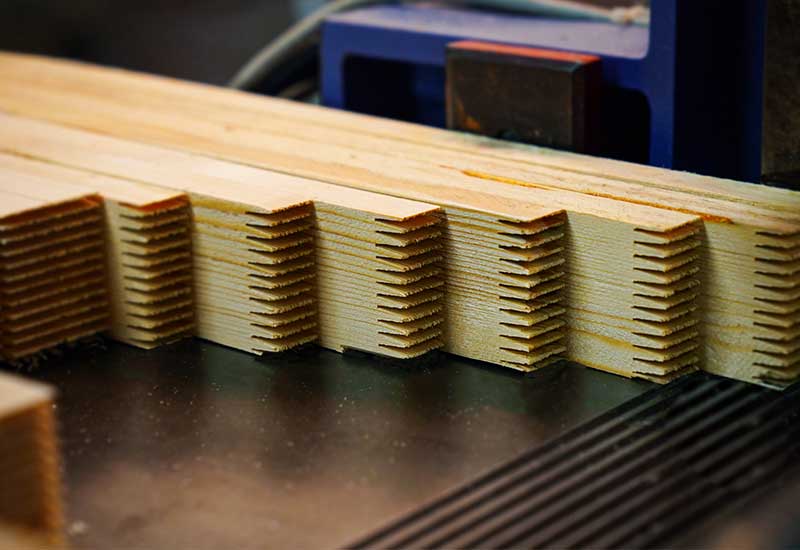
A blockboard is an engineered wood panel made by placing softwood strips (the core) between two layers of hardwood veneer and bonding them under heat and pressure.
This unique construction gives blockboards their strength, stability, and resistance to warping.
They’re commonly used for furniture, interior partitions, doors, and wall panels where light weight and rigidity are important.
Learn more about our Product Hub for details on available blockboard grades and finishes.
What Are Blockboards Used For?
Blockboards are one of the most versatile wood-based products in the market. They’re widely used in:
Furniture manufacturing (tables, wardrobes, cabinets, and shelves)
Interior wall cladding and partitions
Doors, paneling, and ceilings
Architectural and design projects
Their dimensional stability makes them perfect for large surfaces that shouldn’t bend or warp over time.
What Is the Difference Between Blockboard and Plywood? A very popular Google question is: “Which is better: blockboard or plywood?
Feature | Blockboard | Plywood |
Weight | Lighter and easier to handle | Heavier |
Strength | Excellent for long panels and furniture | Better for curved or structural surfaces |
Warping Resistance | High | Moderate |
Cost | Generally more affordable | Slightly higher |
In summary:
- Choose blockboard for furniture, doors, and long panels.
- Choose plywood for curved designs or heavy-duty structures.
Is Blockboard Waterproof?
Yes, depending on the grade you select:
MR (Moisture Resistant) Blockboard: For dry indoor areas such as bedrooms, offices, or living spaces.
BWP (Boiling Water Proof) Blockboard: Suitable for kitchens, bathrooms, and humid climates.
For best results, always ask for IS:1659 certification or equivalent quality standards.
Learn more: Visit our Why Najjar Wood page to understand what makes our waterproof boards last longer.
How Long Does a Blockboard Last?
With proper care and installation, a premium-quality blockboard can last 15–25 years or more.
Factors that affect lifespan include humidity, type of adhesive used, and finish quality.
Regular maintenance such as dusting and polishing helps extend durability.
Is Blockboard Good for Furniture?
Absolutely. Blockboards are known for their excellent screw-holding strength, making them ideal for:
Wardrobes and cabinets
Study desks and tables
Kitchen units
Office partitions and doors
They are less likely to sag than MDF and remain stable in size even in changing temperatures.
How to Identify a Quality Blockboard?
To ensure you’re buying a durable, authentic blockboard, check for:
- Smooth, uniform surface without gaps
- Straight, well-bonded core strips
- No air pockets or hollow sounds when tapped
- IS:1659 or similar quality certification
What Are the Advantages of Blockboards?
Blockboards offer a perfect balance between performance and affordability.
Here are their top benefits:
- Lightweight and easy to transport
- Resistant to warping and bending
- Excellent for long panels
- Strong screw-holding capacity
- Cost-effective compared to solid wood
- Smooth surface for laminates, paints, and veneers
Are Blockboards Eco-Friendly?
Yes, modern blockboards are increasingly eco-conscious.
Manufacturers like Najjar Wood Industries use:
- Sustainably sourced timber
- Low-emission adhesives
- Waste-reduction manufacturing practices
Choosing an eco-friendly blockboard helps reduce deforestation and supports greener construction.
Where Can I Buy High-Quality Blockboards?
If you’re looking for premium blockboards that meet international export standards, explore the Najjar Wood Product Hub.
Our products are engineered for strength, durability, and superior finish, trusted by furniture manufacturers, contractors, and architects worldwide.
We produce:
- Softwood blockboards
- Finge-Joint blockboards
- Custom-sized and finish panels for global markets
📞 Contact our team through the Contact Page for inquiries or orders.
About Najjar Wood Industries
At Najjar Wood, we specialize in export-quality blockboards and engineered wood solutions that combine precision, performance, and sustainability.
Our commitment to high manufacturing standards and trusted raw materials ensures that every panel performs with consistency and long-term reliability.
Learn more about:
- About Us – Our story and commitment to quality
- Why Najjar Wood – What makes our blockboards stand out
- Product Hub – Explore our range of blockboards and applications